Bing Dao Niu Er Hong Cha "AAA" (Maiden Red from Bing Dao), 2025


Place of origin
Bingdao (Chinese: “Cold Island”) is a mountain in Yunnan Province that gave its name to the village of the same name, where tea raw materials for valuable varieties of puer are collected. Here, mainly tree-type tea plants (“Qiao Mu”) with long hairy leaves grow, which determine the special qualities of the finished tea: a rich taste with resinous and dried fruit notes and a bright multifaceted aroma. Collecting leaves from tall trees is difficult and is done only by hand, which directly affects the cost of the final product.
Features of the variety
Local red tea of the Niu Er Hong (Chinese: "Red Maiden") variety is made from unopened buds and adjacent leaves, resembling the similar Yunnan Dian Hong tea in raw materials and production technology. However, due to the special raw materials, Niu Er Hong is a more tender and delicate product with a unique flavor and aroma. Both of them belong to the so-called gongfuhuns. Fresh gongfuhun differs somewhat in taste from more dried out ones, during storage it becomes less sour, which can be traced, including, in the example of this sample.
Appearance and aroma of dry leaf
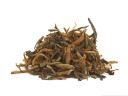
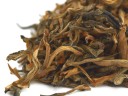
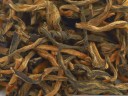
The tea leaf of Niu Er Hong is very tender and brittle, and thanks to the long and slightly twisted tea buds covered with velvety fluff, it looks like a girl's curls. The appearance of the leaf is cheerfully diverse and bright: many long golden curls of buds, as well as greenish-brown, brown leaf twists, curled in the longitudinal direction. The leaf gives off the aroma of menthol freshness, bread crust, dried apricots and flowers. When warmed up, a honey-gingerbread sweet note expressively appears. There is something spicy-bitter from medicinal herbs: thyme or sage.
Brewing
The brewing temperature is around 90 degrees. The tea will open up perfectly in steeps, in a gaiwan or clay teapot:
- porcelain or ceramics will reveal iridescent aromas
- clay will concentrate and enhance the taste of the infusion
Proportion: 6 grams of leaf per 100 ml of container volume. You can also brew it directly in the mug: 2 grams per 250 ml of water, 3-4 minutes of infusion.
Taste and aroma of the infusion
The buckwheat honey-colored infusion smells of rye pastries. The taste is caramel-almond, with notes of dried fruits, Ceylon cinnamon, mandarin, smooth, harmonious and rich. You can feel a pleasant balance of sour and sweet, as well as a light, disappearing resinous bitterness of tea buds. The gaiwan lid smells of heated puffed rice and something bitter-grassy. A long bitter-sweet astringent aftertaste.
Effect and mood
The tea simultaneously gives strength and sets you in a somewhat lazy, contemplative mood. It warms you up well. Cozy, giving a feeling of comfort, a warm blanket and calm - as if you are looking out the window at slowly falling snow. Tea for the morning, for unhurried, long work. Lovers of dian hongs and red teas in general will like it. Not for every day, but not too bright to put it off for a special occasion. Tea for the right mood, when you want a feeling of coziness.
