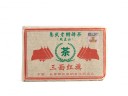
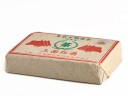
Sheng Pu-erh “Three Red Banners” (Yiwu San Mian Hong Qi), 250 g, 2002


Sheng pu-erh (Chinese: “green, raw pu-erh”) is one of the oldest types of tea, with references to it appearing as early as the 6th century AD. According to legend, tea caravans transporting tea across China and beyond began pressing the leaves into compact forms so they could carry larger quantities. After months of travel through humid and sometimes hot conditions, merchants discovered that the tea had naturally fermented inside its dense packaging, developing a distinctive flavor and character.
The most prized sheng pu-erhs are produced in Yunnan, particularly around Pu’er — the city that gave the tea its name — and Lincang. The value of the finished tea depends not only on its production year and storage period, but also on the exact growing location, altitude and processing method.
Unlike shu pu-erh, sheng pu-erh is traditionally aged through natural microbial and enzymatic transformation rather than artificial pile fermentation. Over time, the tea gradually changes in aroma, flavor and character. Young sheng pu-erhs can resemble green tea, while aged examples develop a deeper, richer profile.
“Three Red Banners” takes its name and wrapper design from the imagery associated with China in the 1950s, when the “Three Red Banners” (San Mian Hong Qi) were a symbol of the country’s political campaign. The symbolism became widespread in Chinese souvenir culture, and tea, as one of the country’s most iconic products, was no exception.
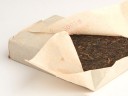
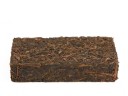
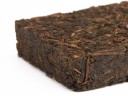
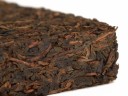
Large grayish-brown leaves are tightly compressed into a brick. The dry leaf has a subtle, sweet-and-sour aroma characteristic of relatively dry storage, reminiscent of a freshly peeled mandarin. When warmed, woody and earthy notes emerge, typical of aged pu-erh.
Given the tea’s advanced degree of aging and transformation, it can be brewed with relatively hot water, around 90–95°C. A thick-walled clay teapot works particularly well. Use 6–8 g of tea per 100 ml of teapot capacity. Rinse the leaves with the first infusion, then allow them to rest for 1–2 minutes so the compressed leaves can soften and open.
The first infusions are bright yellow-orange, but the liquor quickly gains strength and color, developing into a rich reddish-brown, almost cognac-like hue. The aroma is herbal and reminiscent of dried fruit, with a gentle acidity and unexpected notes of heated stone and freshly cut grass dried in the summer sun.
The flavor is smooth and unusually fruity-earthy, with moderate astringency and a pronounced acidity reminiscent of slightly underripe pear. It evokes the atmosphere of a July garden filled with fruit that is still slightly unripe and astringent, yet already perfectly edible.
A subtle “green” herbal note remains in the background, reminiscent of chamomile and nettle. As the tea cools, the acidity becomes more pronounced, sharper and slightly metallic. The finish is lightly floral — almost subtle, yet persistent.
The tea has a quick and pronounced stimulating effect, filling the body with energy and encouraging activity. Given its character, it is best enjoyed in the first half of the day, especially before demanding mental work.
An interesting choice for those looking for a distinctly invigorating pu-erh, and a useful reference point for exploring the differences between naturally aged tea and shu pu-erh.
