**Sheng Pu-erh “Feng Huang Yin Xiang”, 2021, 357 g


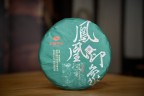

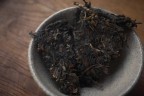
This Menghai sheng pu-erh, known as “Phoenix,” looks and feels as impressive as its name suggests. Its beautiful fresh green wrapper conceals long, silvery-green strands of tea leaf.
The phoenix symbolizes rebirth, which is particularly fitting for sheng pu-erh: as it continues to ferment and age, its character evolves year after year. In the cup, lingering bitterness is consistently followed by a returning sweetness.
The pressed tea has a bright, fresh aroma reminiscent of gooseberries and raspberries, with a touch of orange-like sweetness. When warmed, the aroma becomes even sweeter and spicier, revealing notes of vanilla and caramel pastries. Its freshness, sweetness and aromatic depth are somewhat reminiscent of medium-roasted oolongs.
For brewing, use the standard approach for sheng pu-erh: water at 85–90°C and ceramic or porcelain teaware, preferably a gaiwan or a teapot with a wide spout for quick pours. Use the first infusion as a rinse, then let the leaves rest for 1–2 minutes to open up.
For gongfu-style brewing, use 4–5 g of tea per 100 ml. Keep the first infusion very short — around 5 seconds — to avoid excessive bitterness.
You can also brew it in a mug or teapot: use approximately 2 g of tea per 300 ml, with slightly cooler water at 82–85°C.
The liquor is a beautiful wheat-yellow color with the characteristic herbal and medicinal aroma of sheng pu-erh. The taste is distinctly sweet with a gentle acidity and a candy-like quality. Notes of pineapple, melon and fresh herbs appear in the overall bouquet.
As the infusions progress, a subtle saltiness emerges, while each sip reveals a delicate bitterness reminiscent of buckwheat honey. The finish is distinctly floral.
A bright, summery and joyful tea, full of warmth and sunshine.
The effect is somewhat dynamic: at first it may create a light, heady sensation, then gradually develops into a feeling of energy and lively inspiration. Particularly well suited to contemplative, unhurried work.
